What God Taught Me Working in the Anti-Human Trafficking Industry
In this post:
✦ The calling I carried for years before I ever entered the anti-human trafficking industry
✦ Why I came to realise that rescue is only the beginning
✦ What working in this industry taught me about healing, freedom and restoration
✦ The question I wrestled with most: Where is God when unimaginable evil happens?
✦ What Joseph’s story taught me about suffering and God’s ability to bring good from what was meant for harm
✦ What God ultimately taught me about true freedom in Christ
I knew from the time I was about twenty that I was going to work in the anti-trafficking space. I had no clear picture of how it would happen or when the door would open, only a quiet, steady conviction that this was the path marked out for me. Looking back, that sense of calling sat with me for years before anything practical unfolded. It was not a loud or dramatic knowing. It was more like a deep internal pull that never quite went away, even when life moved in other directions. One day I may share the story of the first seed that was planted and the moment it finally began to bear fruit. For now I’ll leave that for another time (though if you’d like to hear it, leave a comment and I’ll know).
I want to make one thing clear before getting into this article. My role in the anti-human trafficking industry was in marketing and communications, not frontline rescue work. I was never the person carrying out rescues or working directly in the field. My role was to take the stories, cases, research and realities of this work and communicate them in a way that people could understand and engage with.
That said, my work took me overseas, gave me opportunities to connect with survivors and brought me into close contact with the realities behind the stories I was communicating. For years, I was responsible for taking confronting situations and finding a way to tell them with dignity and sensitivity. So while my experience was different from that of a frontline worker, it still profoundly shaped the way I see trauma, restoration, freedom and the heart of God.
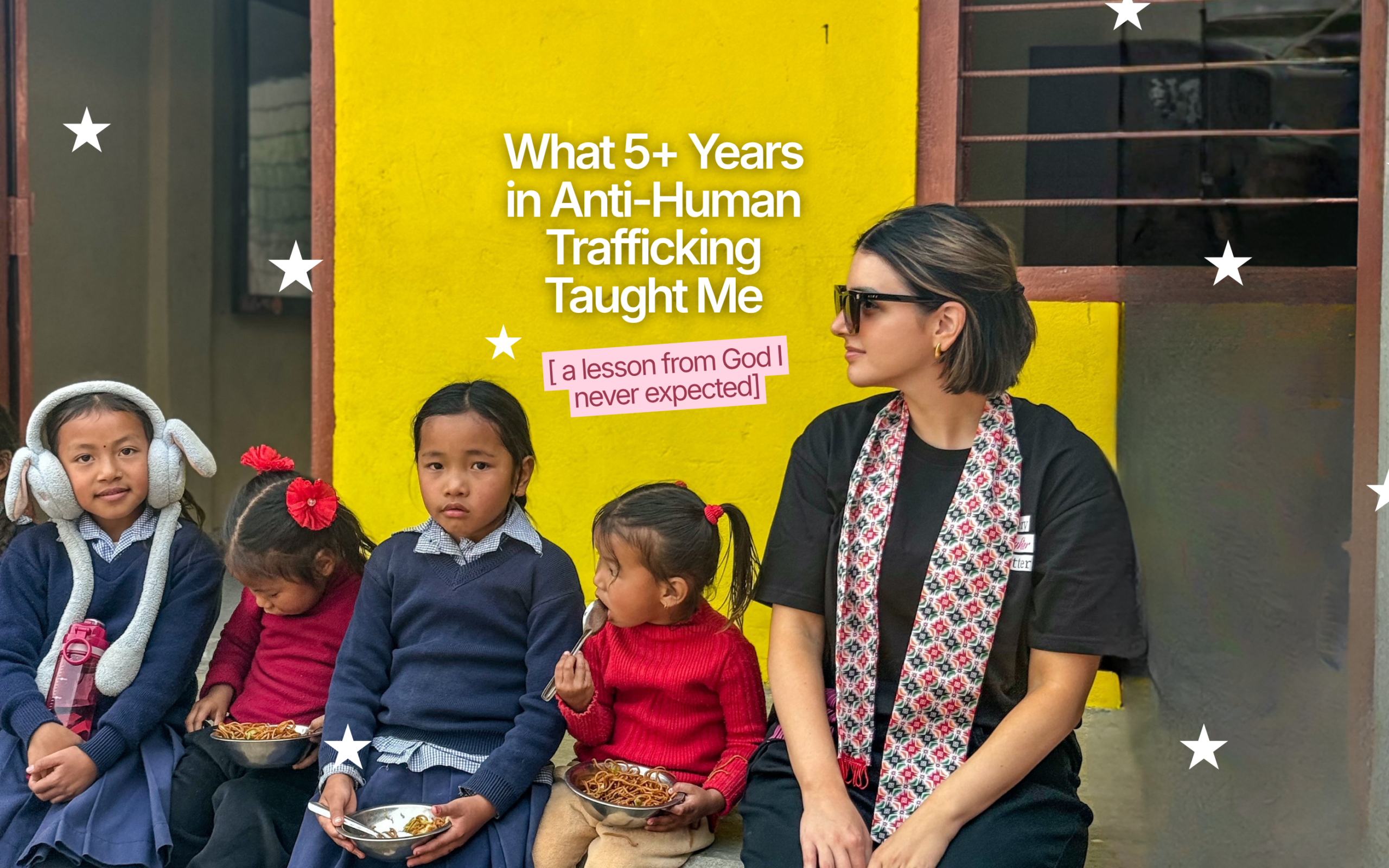
I spent 5+ years in the industry. Most of that time was with an Australian organisation working in Nepal (you can find them at www.everydaughtermatters.org.au), and for a shorter season I also worked in the Australian space. For years before any of it became real, I carried a particular picture of what the work would feel like. I imagined the excitement of using my gifts to be part of the rescue itself. In my mind, rescue was everything. It was the moment of light breaking into darkness, the dramatic turning point where someone was pulled from danger into safety. That image felt powerful and purposeful. When people later discovered where I worked, I noticed the same instinct in them almost every time. Conversations would quickly turn to rescue stories. The long road that came after rarely entered the picture. Most people, myself included for a long time, stopped at the moment of extraction and assumed that was the main work.
Rescue Is Only the Beginning
The reality, of course, was more complex and far less glamorous than I had pictured. The work was deeply rewarding, yet it carried its own quiet weight of hard days and heavier seasons. There were moments of genuine joy and breakthrough, but there were also days that sat heavy on the heart. My hunger to understand every part of the space eventually consumed me. I wanted to know the systems, the vulnerabilities, the pathways in and the long pathways out. That intensity became part of the reason God led me out for a season. Looking back, I can see how necessary that stepping away was. What stayed with me most clearly through all of it is this: rescue is only the beginning. The real journey starts the moment someone is brought to safety.
What I have come to realise is that it is not so different from coming to Christ. We arrive carrying brokenness, hurt and trauma. Sometimes the brokenness is obvious and recent. Sometimes it is older and more deeply woven into who we have become. He rescues us, yet the deeper work of healing and freedom stretches out ahead of us, often for years. It is not a single moment of arrival followed by effortless peace. It is a walking out, a gradual unlearning of old survival patterns, a slow learning to trust again. I watched the same pattern unfold in the lives of young women and children who had survived unimaginable things. Rescue mattered deeply. It was essential. Without it, nothing else could begin. But restoration was where true healing took root and began to grow. The excitement of the initial rescue is real and necessary, yet the lasting joy comes from witnessing the long, quiet, sometimes painfully slow work of restoration. Watching someone begin to believe they are worth protecting. Watching trust return in small, fragile ways. Watching a future that once felt impossible start to take shape.
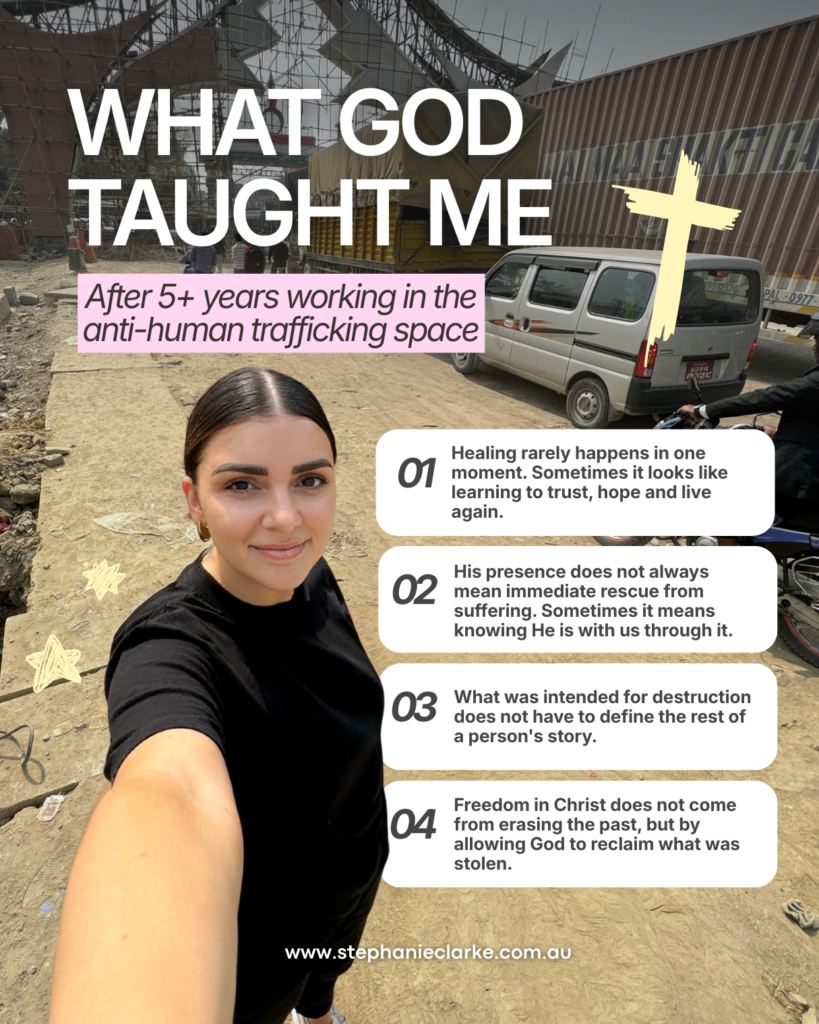
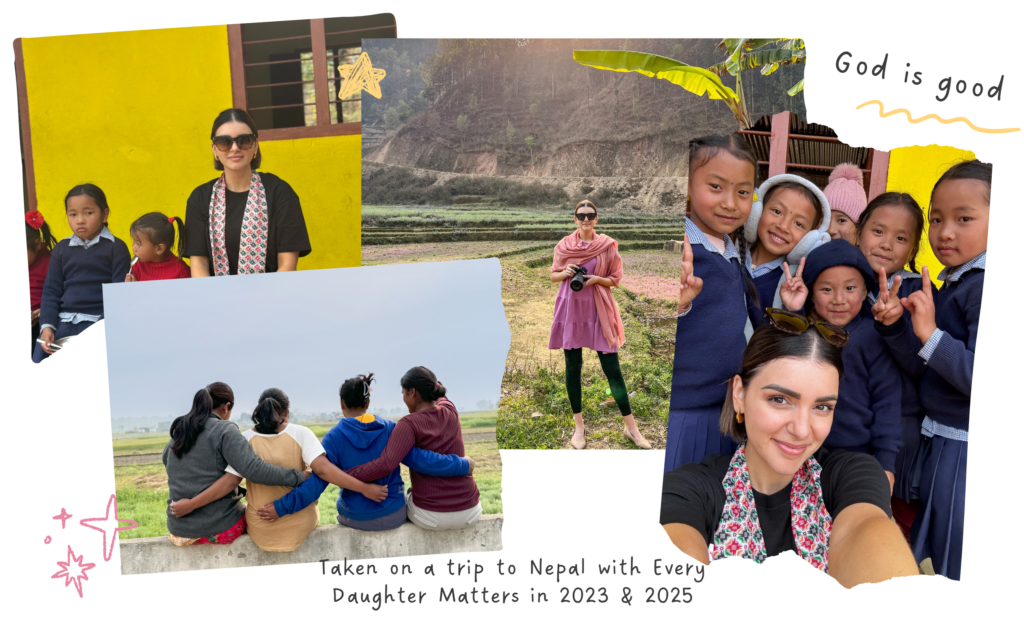
Picture taken in Nepal on a trip with Every Daughter Matters
What the World Says Versus What I Saw
I have thought often of those young women and children. The world tends to tell us that trauma leaves a permanent mark, that no matter how hard we work or how much support we receive, we can never be fully free of it. After such concentrated evil, the idea of complete healing seems almost impossible. By the world’s measure, it truly is. The damage is too deep, the memories too sharp, the losses too great. The narrative is one of lifelong management rather than true freedom. Yet what I have witnessed is something else entirely. Just as we come to Christ broken and, over time and with open hands, find Him gently setting us free, I have seen the same freedom begin to take hold in survivors who choose to walk with Him. It does not always arrive quickly. It rarely looks tidy. There are setbacks and hard days. But I have watched people move from a place of deep captivity into a growing sense of safety and hope. No matter how dark the history, He can bring a person to a place where the enemy no longer holds the same power. That freedom is what God desires for every one of us. It is not the absence of memory or the erasure of what happened. It is the gradual reclaiming of a life that evil tried to steal.
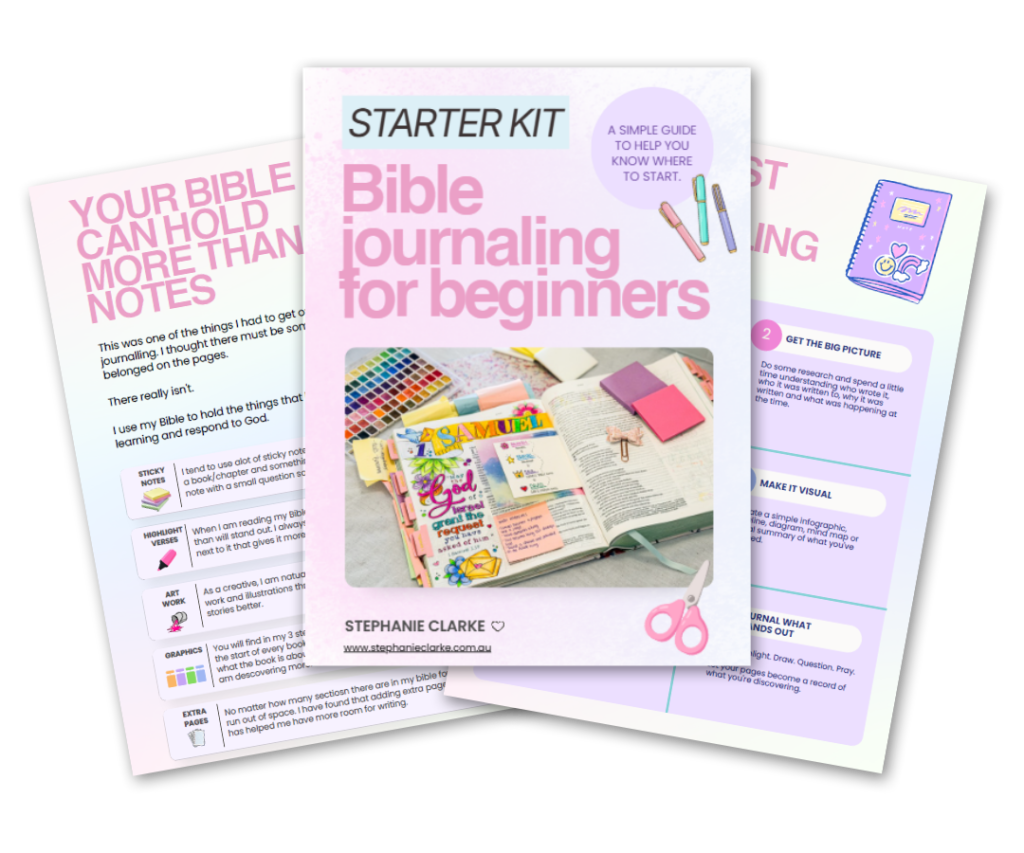
Bible Journaling for beginners FREE guide
I’ve created this FREE Bible Journaling Guide for Beginners to show you how to get started with Bible journaling in three simple steps.
Inside, I’ll walk you through what you need, how to approach your Bible and simple ways to make Bible journaling your own.
God in the Darkest Places
Seeing that kind of evil up close forced me to wrestle with a hard question many times: if God is loving and gracious, how can He allow such things to happen? It is not an abstract theological puzzle when you have seen the real cost in human lives. I have come to understand that God is not the author of evil. Evil exists because of the fall and because He gave us free will. He wants us to choose Him, not be forced into relationship. With that freedom comes the painful possibility that people will choose harm, and that harm can be devastating. Yet God is not absent in the suffering that follows. He does not turn away in the darkest places. He does not abandon people to the worst that others can do. When we call on Him, He walks with us through them, often in ways we only recognise looking back. Presence does not always mean immediate rescue from the situation. Sometimes it means companionship inside it.
Joseph’s story has stayed with me through all of this. He endured years of betrayal by his own brothers, slavery, false accusation and imprisonment, yet God never left him. The years were long and the injustice was real. Genesis 50:20 captures it so clearly: “You intended to harm me, but God intended it for good.” The world’s intent may be destruction, but God is able to take even the worst suffering and weave it into a larger purpose when we let Him. That does not make the suffering good. It does not erase the evil or pretend the pain was somehow necessary. It simply means that evil does not get the final word. God is still able to bring life out of what was meant for harm.
God wants to rescue us. He wants to walk with us through restoration.
He wants to free us from the burdens we carry and, through that long journey, lead us into the purpose He has prepared. The path is rarely straightforward. It often includes seasons of waiting, of healing that feels incomplete, of learning to trust again after trust has been broken. Yet His desire remains the same. Whatever part of the road you are on right now, know that His longing for you is complete freedom in Christ. That freedom is found in Him. It is not something we achieve through perfect effort. It is something we receive as we keep walking with Him, even when the steps feel small and uncertain. Jeremiah 29:13 – “Seek Him with all your heart, and you will find Him”. He is not far. He has never been far, even in the places that felt most abandoned.
What I Hope You Take Away
✦ Rescue is only the beginning.
Whether we are talking about physical rescue or the work God is doing in our own lives, freedom is often a journey rather than a single moment. Healing, restoration and learning to trust again can take time.
✦ God is not absent in the darkest places.
There will be things we cannot understand and suffering we wish we could undo. But His presence does not disappear simply because we cannot see what He is doing.
✦ Your past does not have the final word.
What has happened to you may have shaped you, but it does not have to define the rest of your story. God is still able to restore, redeem and bring purpose from places that once felt completely broken.
✦ Freedom in Christ is a journey.
You don’t have to have everything figured out today. Keep bringing the broken places to Him, keep seeking Him and keep taking the next step.
Whatever season you are in right now, remember this: God has not left you there. He is still working, still restoring and still leading you towards freedom.
“You intended to harm me, but God intended it for good.”
Genesis 50:20

MY JOURNALING BIBLE
This is the Bible I use and absolutely love for Bible journaling. I wanted a Bible that gave me plenty of space to underline, highlight, write notes and get creative as I spend time in God’s Word.