Must Have Bible Journaling Tools for Beginners
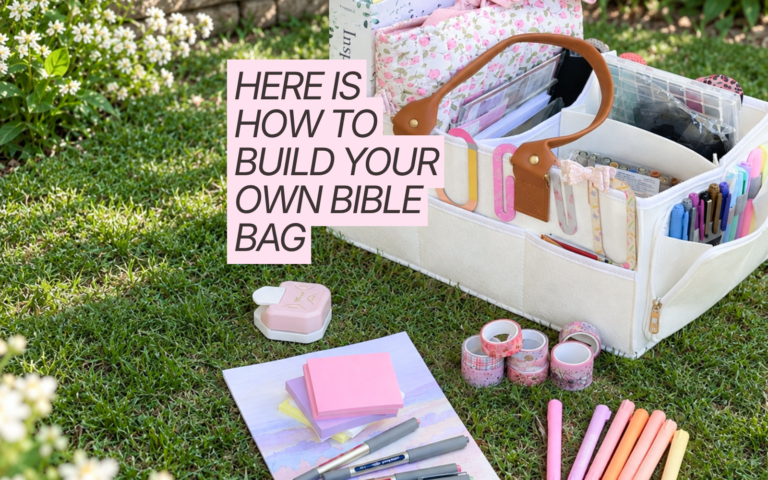
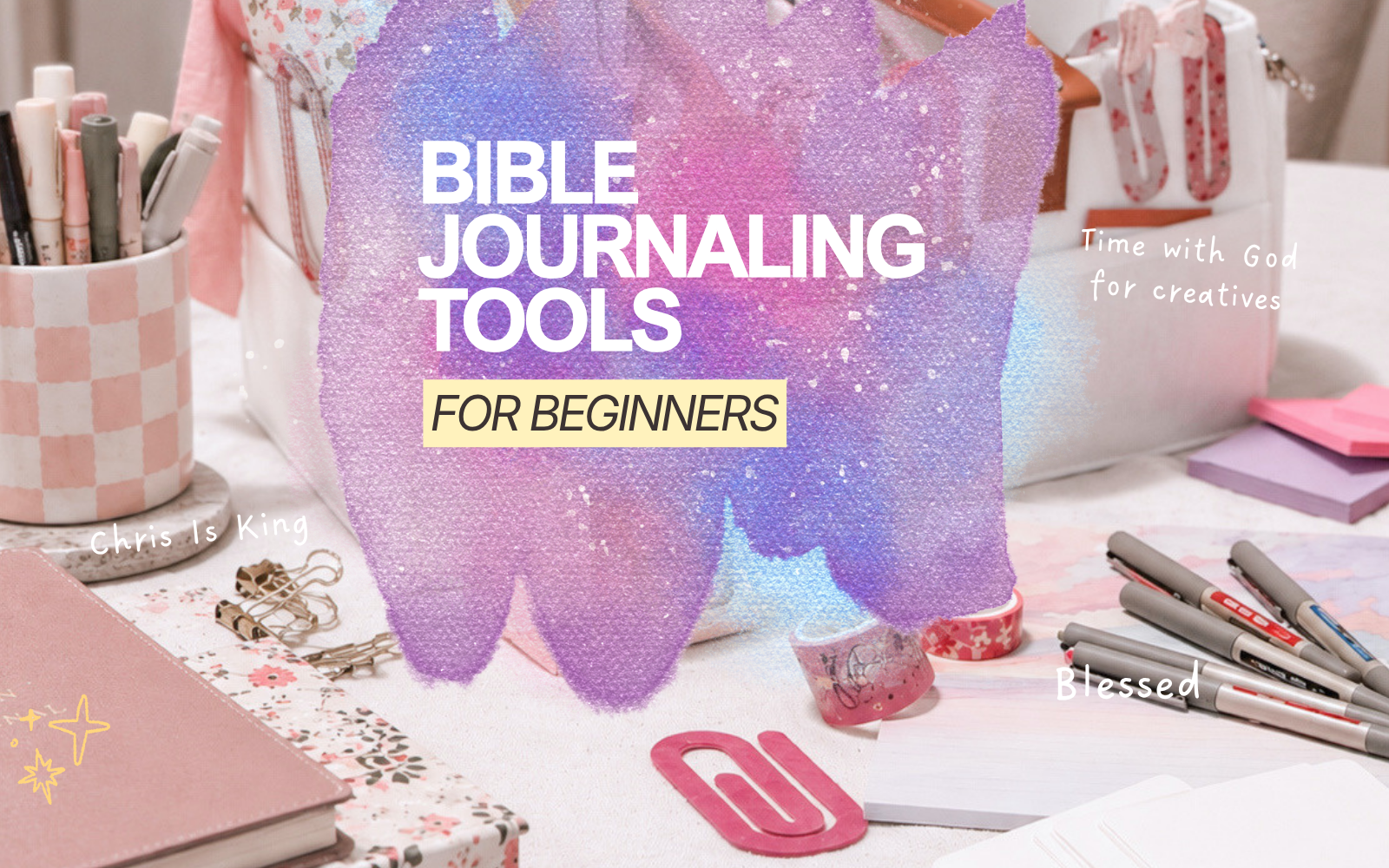
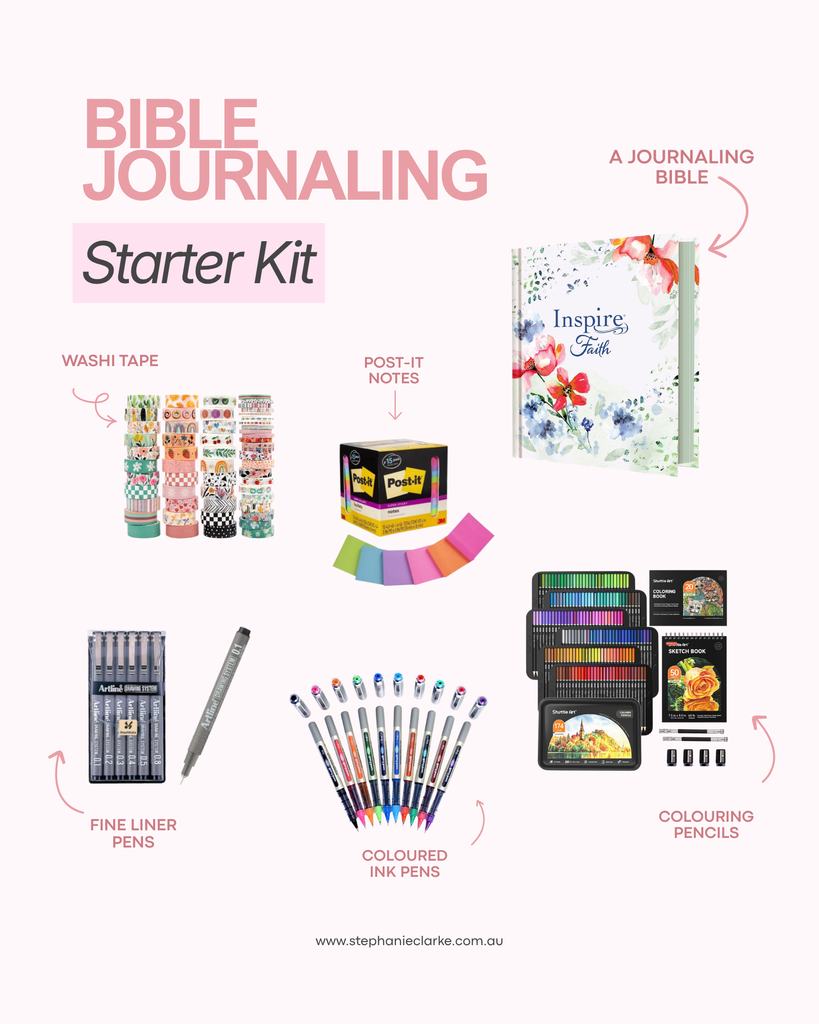
When I first started Bible journalling, I definitely thought I needed more supplies than I actually did. There are so many beautiful Bible journalling setups online that it is very easy to think you need every coloured pen, sticker, washi tape and fancy tool before you can get started, but most of what I use has actually become quite simple. These are my most used Bible journalling items, and they are the things I reach for when I’m sitting down with my Bible and want to create, write and study.
1. A Bible Journal
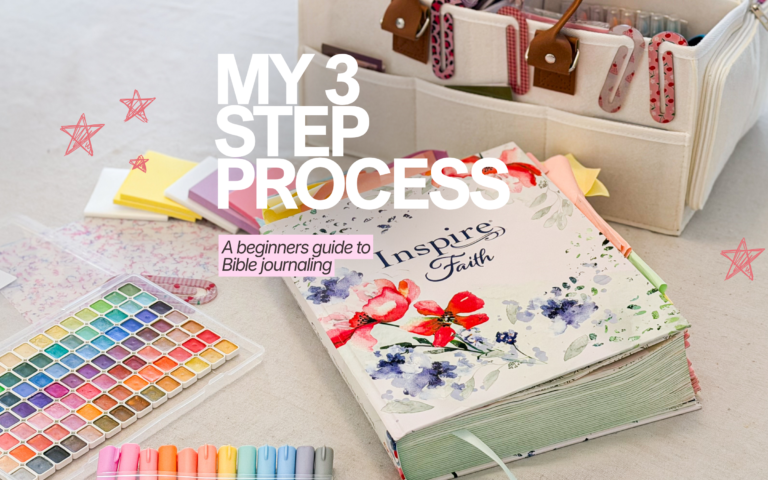
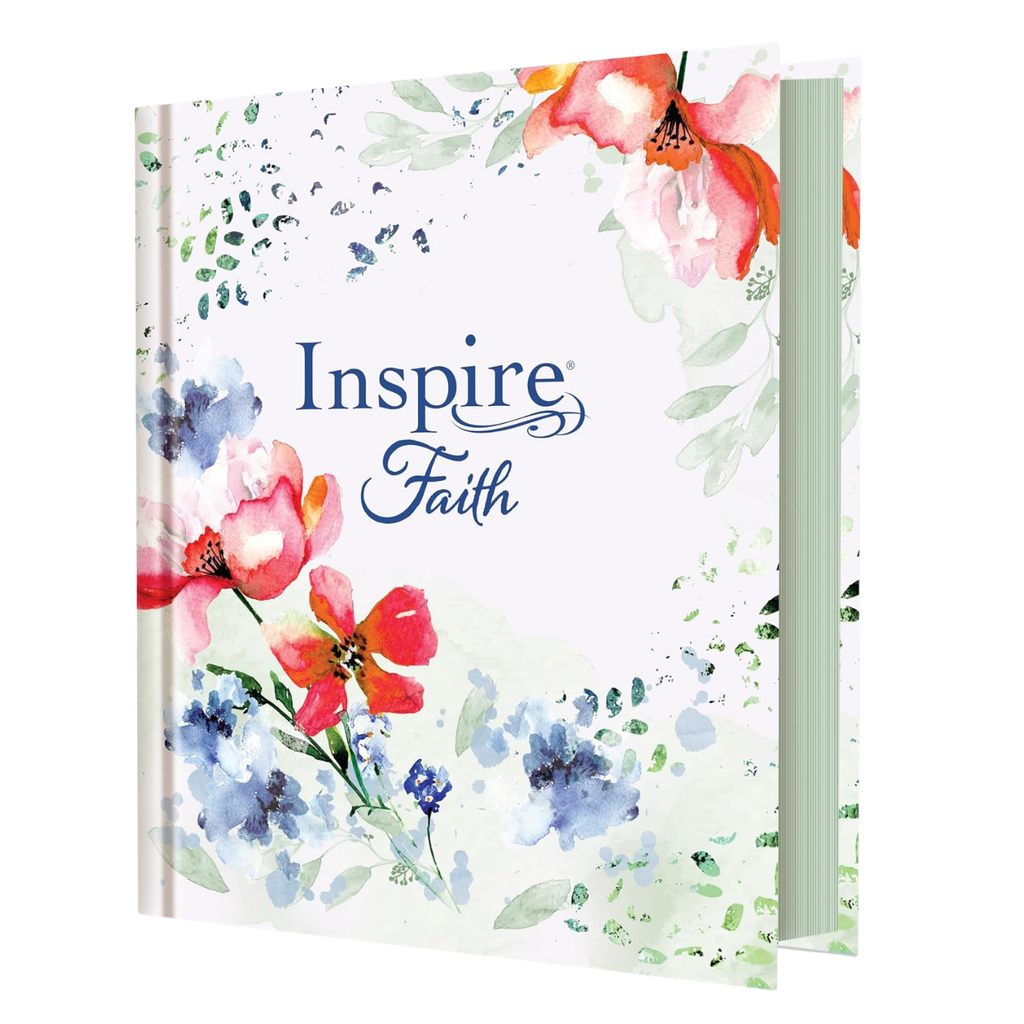
If I had to choose the one thing that has made the biggest difference to how I spend time with God, it would be my Bible journal. The Bible I use is the Inspire Faith Bible, Large Print NLT, Filament Enabled, and I genuinely cannot recommend it enough, particularly if you are someone who is creative or learns visually.
MY JOURNALING BIBLE
This is the Bible I use and absolutely love for Bible journaling. I wanted a Bible that gave me plenty of space to underline, highlight, write notes and get creative as I spend time in God’s Word.
This Bible completely transformed my faith and the amount of time I spend with God because it gave me a way to actually interact with what I was reading. Instead of simply reading a chapter and closing my Bible, I can colour, write, add pages, create little illustrations and make notes about what I’m learning, and that has made spending time in God’s Word something I genuinely look forward to. I think finding a Bible that suits the way you naturally learn can make such a difference, and for me, this one has been a game changer.
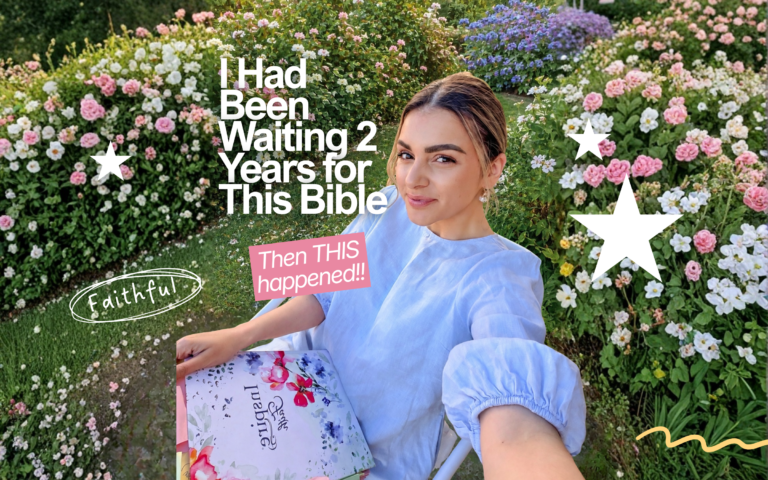
I also love that it is the NLT, because as I’ve written about before, finding a translation I could actually understand completely changed the way I read Scripture. If you’re interested in how I ended up with this particular Bible, [you can read the story here].
2. Cardstock Paper
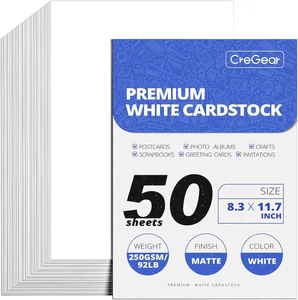
Cardstock is probably one of the things I use most, even though it sounds like a very simple supply. I use it when I want to create an overview, infographic, notes page or something that needs to be a little more substantial than normal paper, and then I’ll often put colourful craft paper behind it so that the cardstock has a little frame around it.
You will see throughout this blog, that I always draw infographics to make certain information or sections stand out. For this reason, I always keep cardstock paper on hand.
3. Colourful Notepad Paper
This is another incredibly simple one, but I use colourful notepad paper all the time. A lot of my Bible journalling involves writing notes and creating additional pages, so having colourful paper ready to go means I can add creativity without having to sit down and decorate something from scratch.
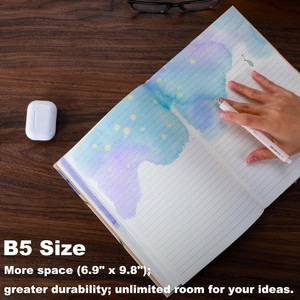
I’ll write notes on the paper, create a little summary or add something I’ve learned and then attach the page into my Bible. Sometimes I’ll use it for a big picture summary, sometimes for an overview and sometimes it’s simply somewhere to write down something I don’t want to forget.
I actually think this is one of the easiest ways to start Bible journalling if you’re nervous about the creative side of it. You don’t have to draw anything; you can simply write your study notes on a piece of colourful paper and add it to your Bible, and suddenly you’re creating a really personal page.
4. Coloured Pencils
These are the coloured pencils I use, and for a beginner I think they are really hard to beat for the price. I use them for colouring the illustrations in my Bible, adding colour to pages and creating the bright, colourful spreads that you see throughout my Bible.
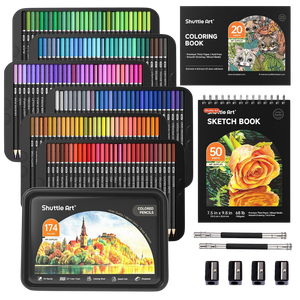
I particularly like having a large range of colours because I love being able to choose colours depending on the page I’m working on. You obviously don’t need 174 colours to start Bible journalling, but if you are someone who loves colour and wants a big set without spending a fortune, these have been a really good option for me.
And I use coloured pencils rather than trying to do everything with pens because they give me so much more control. I can build up colour slowly, blend different shades and add detail without feeling like I’ve ruined a page if I make a mistake.
5. Coloured Rollerball Pens
I use these Uni-ball EYE rollerball pens when I’m writing on the cardstock and colourful paper that I add into my Bible. I love having lots of colours because it means I can make my notes and headings colourful without having to decorate the entire page.
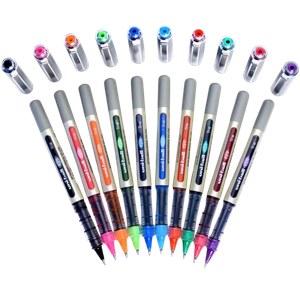
Uni-Ball EYE UB-157 Rollerball Pen
These are particularly useful for writing headings, key points and little notes on my added pages. I don’t use these directly on my Bible paper, which is important because Bible pages are so thin and different pens can behave very differently on them.
For me, these are more of an added-page tool than a Bible-page tool, and I love having them nearby when I’m creating my own inserts.
6. Fine-Liner Pens
These are another favourite of mine, particularly when I’m creating little illustrations, diagrams or adding detail to my own pages. I use the Artline Fineliner 0.4mm pens, but again, I don’t use these directly on the Bible paper.
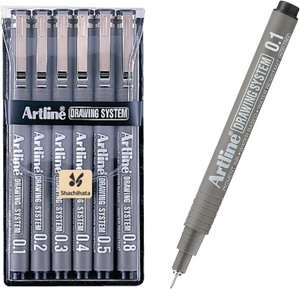
I use these more when I’m working on cardstock or extra pages that I’ve added into my Bible. They give me that really clean, fine line that works well for writing, outlining drawings and creating the little visual details that make my pages feel finished.
I especially love having a black fine-liner because even when I’m using lots of colour, it gives everything a little bit of definition. It’s one of those supplies that doesn’t look particularly exciting when you buy it, but I find myself reaching for it constantly.
7. Washi Tape
Washi tape is one of those supplies that I originally thought I’d use purely because it was pretty, but I actually use it for practical reasons all the time. It is one of my favourite ways to attach extra pages into my Bible, create little tabs and add colour around the edges of a page.
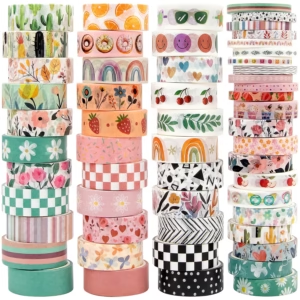
I particularly like using it with my cardstock and notebook paper because it makes adding new pages incredibly simple. I can create something separately, decide where I want it to go and then attach it with washi tape without making a permanent change to the Bible itself.
And yes, I absolutely choose washi tape because I like the colours and patterns. I love that something so simple can make an otherwise plain page feel like it belongs with the rest of my Bible.
8. Post-it Notes
I use Post-it Notes when I want to add something without committing it permanently to the page. They are particularly useful for my big picture notes because I can write a quick snapshot of what a book is about and have it somewhere visible as I work through the book.
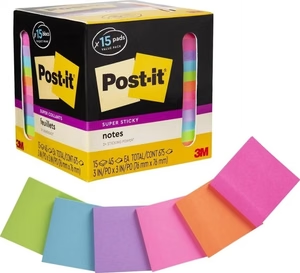
They’re also great for questions. If I’m reading something and think, I need to come back to this, I can quickly write it down rather than interrupting what I’m doing.
I think they’re particularly useful when you’re a beginner because they let you experiment. You can write something down, move it, change it or remove it without worrying about whether you’ve permanently altered your Bible.
9. Scissors and Glue
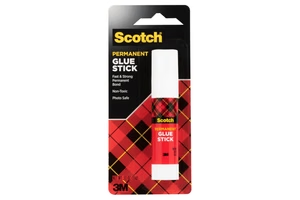
These aren’t particularly glamorous Bible journalling supplies, but I use them constantly when I’m creating extra pages. Scissors are useful for trimming cardstock and printed pages to fit, while glue can be helpful when I want to attach something more permanently.
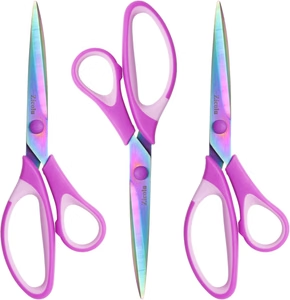
I tend to use washi tape more often because I like the flexibility of being able to move things around, but there are definitely times when I want something securely attached. I usually keep these with the rest of my Bible journalling supplies so everything is ready when I sit down to create.
And that’s really the approach I’ve taken with my supplies generally. I haven’t gone out and bought every Bible journalling product I can find; I’ve slowly collected things that I genuinely use, and most of them are very simple craft supplies that can be used in lots of different ways.
So, What Do You Actually Need to Start Bible Journalling?
If you’re completely new to Bible journalling, I would start with the things you are most likely to actually use. For me, that would be a Bible you love, some coloured pencils, a few good pens, cardstock or colourful paper, Post-it Notes and some washi tape, and then you can add other things as you work out what you enjoy.
The beautiful thing about Bible journalling is that you can make it as simple or as creative as you want. I love sitting down with lots of colour and creating a big spread, but some of my most useful pages are actually just a piece of colourful paper with my handwritten notes stuck into the Bible.
And if you’re looking at all of these supplies and still thinking, Okay, but what do I actually DO with them? that’s exactly why I created my Bible Journalling Starter Kit. It takes the way I personally approach a new book of the Bible and gives you the pages to work through that process yourself.
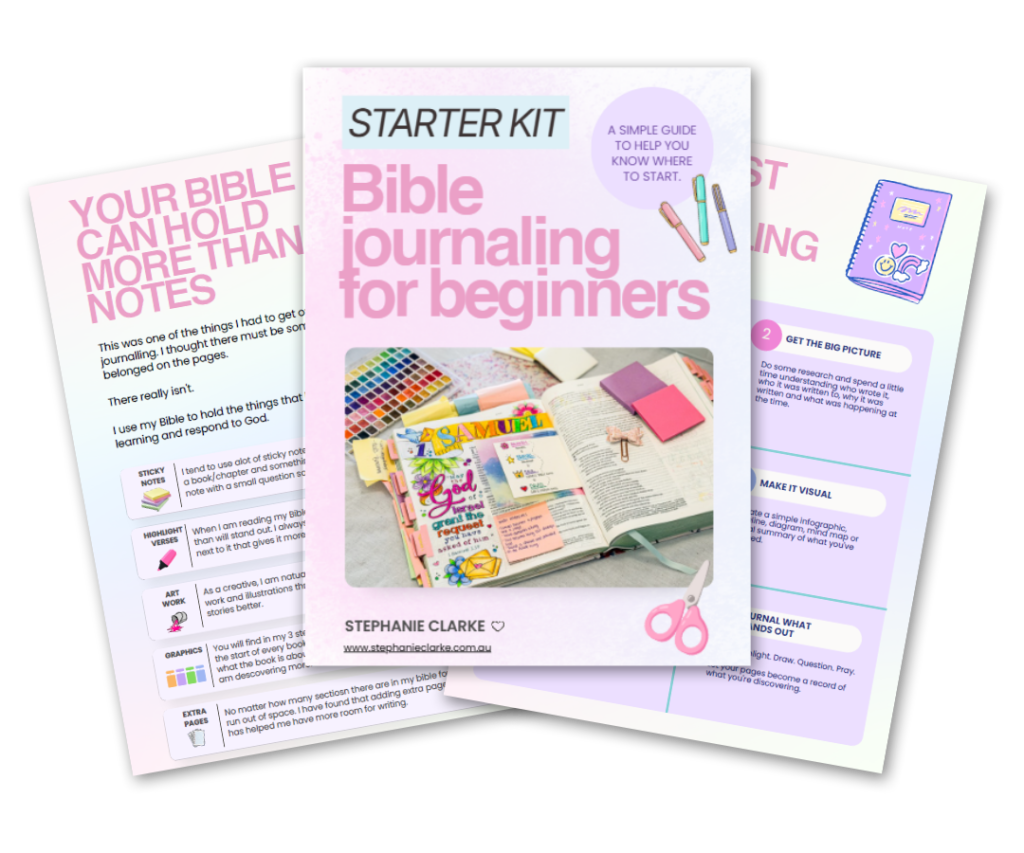
Bible Journaling for beginners FREE guide
I’ve created this FREE Bible Journaling Guide for Beginners to show you how to get started with Bible journaling in three simple steps.
Inside, I’ll walk you through what you need, how to approach your Bible and simple ways to make Bible journaling your own.
What You Can Do Today to Start Your Bible Journalling Journey
✦ Choose one book of the Bible.
Don’t worry about trying to journal through the whole Bible. Pick one book that you want to spend some time getting to know.
✦ Start with the big picture.
Take a few minutes to get a quick snapshot of the book before you dive into the details. Understanding what you’re about to read gives you somewhere to start.
✦ Write your own overview.
Take what you’ve discovered and put it into your own words. Write down the people, events and themes you want to remember as you work your way through the book.
✦ Create an infographic.
Turn what you’ve learned into something visual. Draw it, colour it, map it out or use a template — whatever helps you see the story and remember it.
✦ Start journalling as you read.
Now open your Bible and begin. Highlight what stands out, write down your thoughts, add colour and create pages that help you engage with what God is teaching you.
You don’t need to know exactly what you’re doing before you start. Begin with one book, follow the process and let your Bible become a reflection of what you’re learning with God.