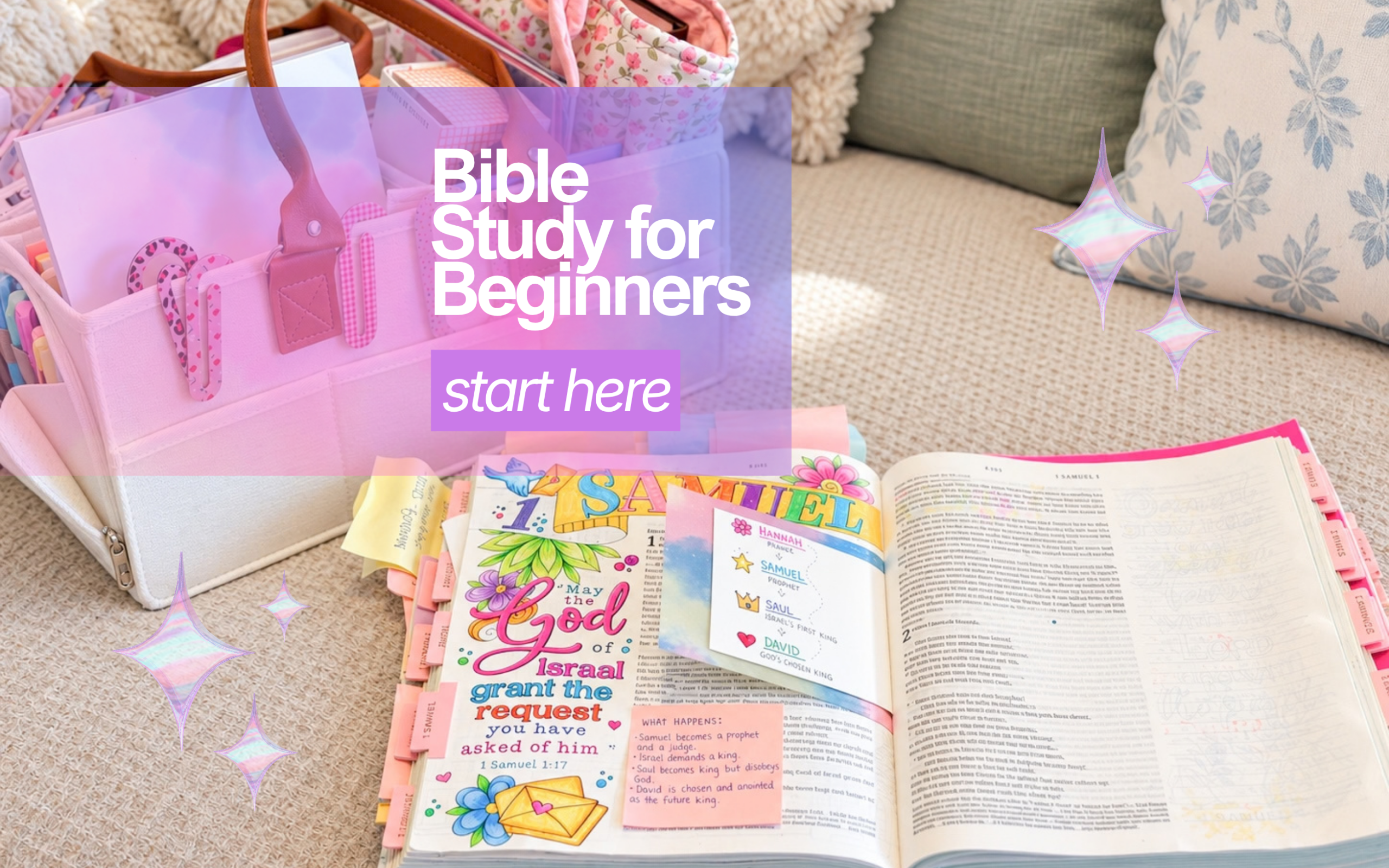
Bible Study Methods for Beginners
In this post:
✦ Four simple Bible study methods for beginners that won’t leave you overwhelmed
✦ How to slow down and understand what is actually happening in a passage
✦ A simple way to study one chapter at a time
✦ How I study people and characters in the Bible and follow their story through Scripture
✦ How to dig deeper into one verse without taking it out of context
✦ What I actually write in my Bible when I’m studying Scripture
✦ How to start studying your Bible more deeply with one simple place to begin
When I first started wanting to study my Bible more deeply, I think I assumed Bible study needed to be far more complicated than it actually did. I thought properly studying Scripture meant having commentaries open, knowing the historical background of everything I was reading and probably understanding a little Greek and Hebrew along the way. I wanted to understand my Bible, but I didn’t always know what I was supposed to be looking for once I opened it.
Over time, I’ve realised that some of the most helpful Bible study methods for beginners are actually very simple. A lot of Bible study is learning to slow down and pay attention to what is already there: who is speaking, what is happening, why something matters, what happened before and after, and how it connects with the rest of Scripture.
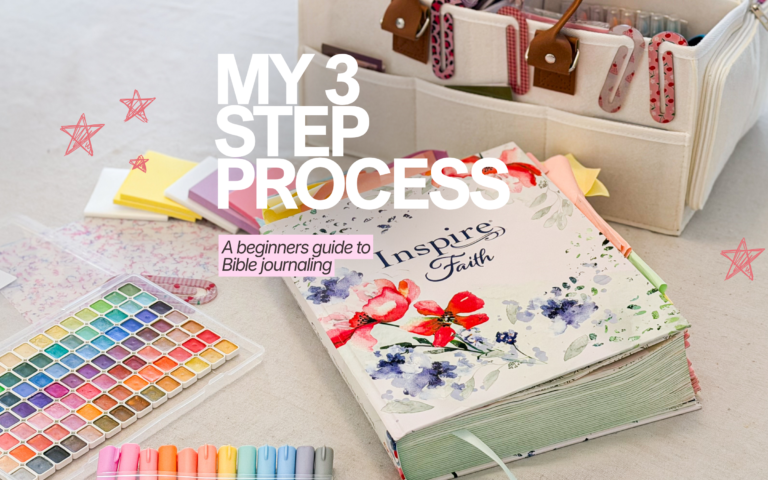
That is also how I approach Bible journaling. I’m usually not filling the margins of my Bible with my thoughts and prayers. I’m writing down things that help me understand the text better, so that when I come back to that passage six months or even a few years later, I can see what I learned and understand what I’m reading.
If you want to study your Bible but have no idea where to begin, these are four simple methods I would start with.
1. Start With What Is Actually Happening
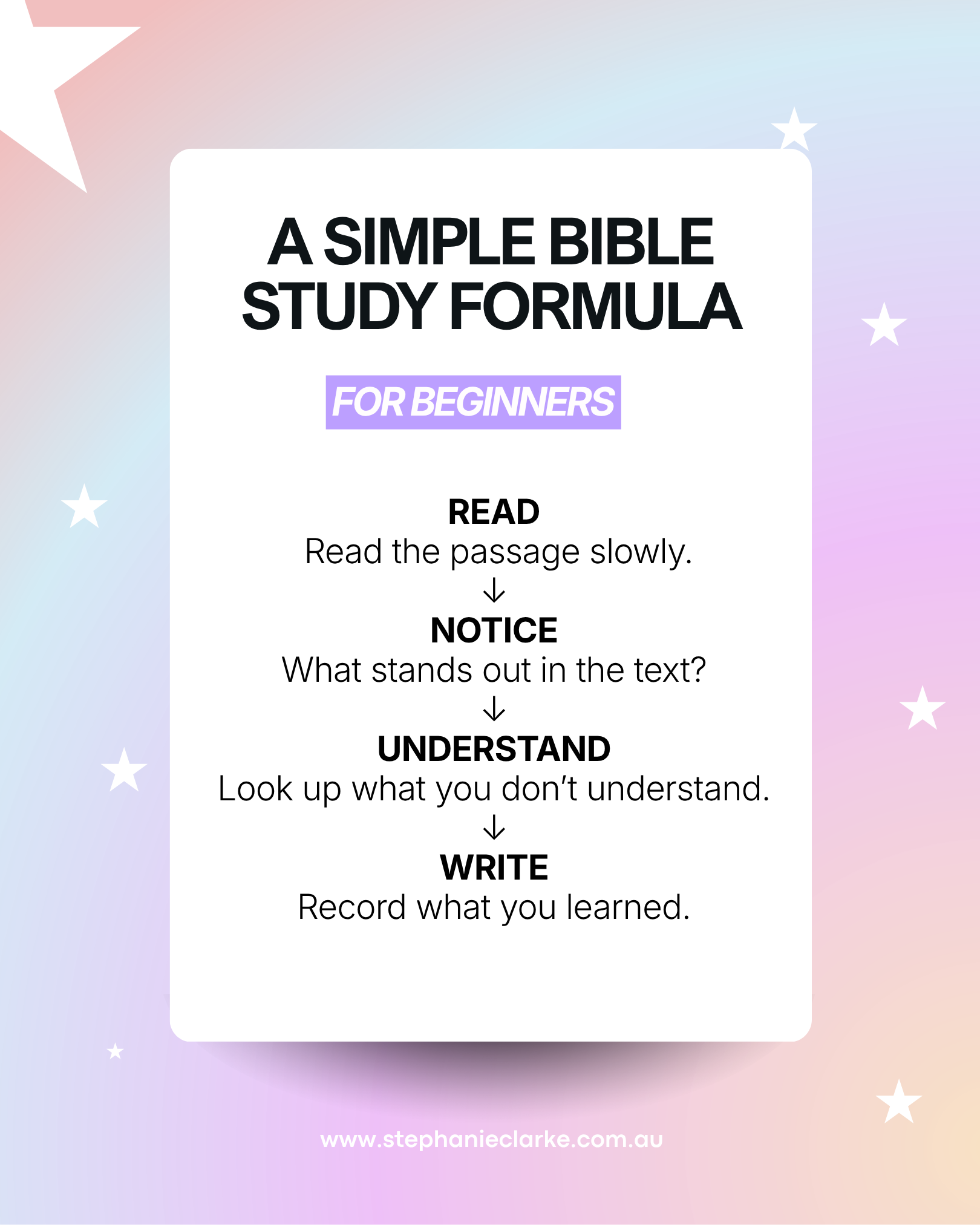
This is probably the simplest Bible study method, and I think it is one of the best places to begin. Before I start looking things up or trying to work out some deeper meaning in a passage, I want to make sure I actually understand what is happening on the page.
Read the passage slowly, and if you need to, read it again. Look at who is there, who is speaking, where they are, what has happened and what changes during the passage. Sometimes I find myself reading a familiar story so quickly that I miss details I have never really noticed before.
You can keep this very simple. As you read, look for things like:
- Who are the main people?
- Where is this happening?
- What is happening in this passage?
- Is there anything I don’t understand?
- Is anything repeated or emphasised?
- What happens immediately before and after this?
This is also where context starts to become really important. A verse can sound quite different when it is pulled out on its own, which is why I rarely want to study a single sentence without at least reading the verses around it. Understanding the bigger conversation or story often answers questions before I have even needed to look anything up.
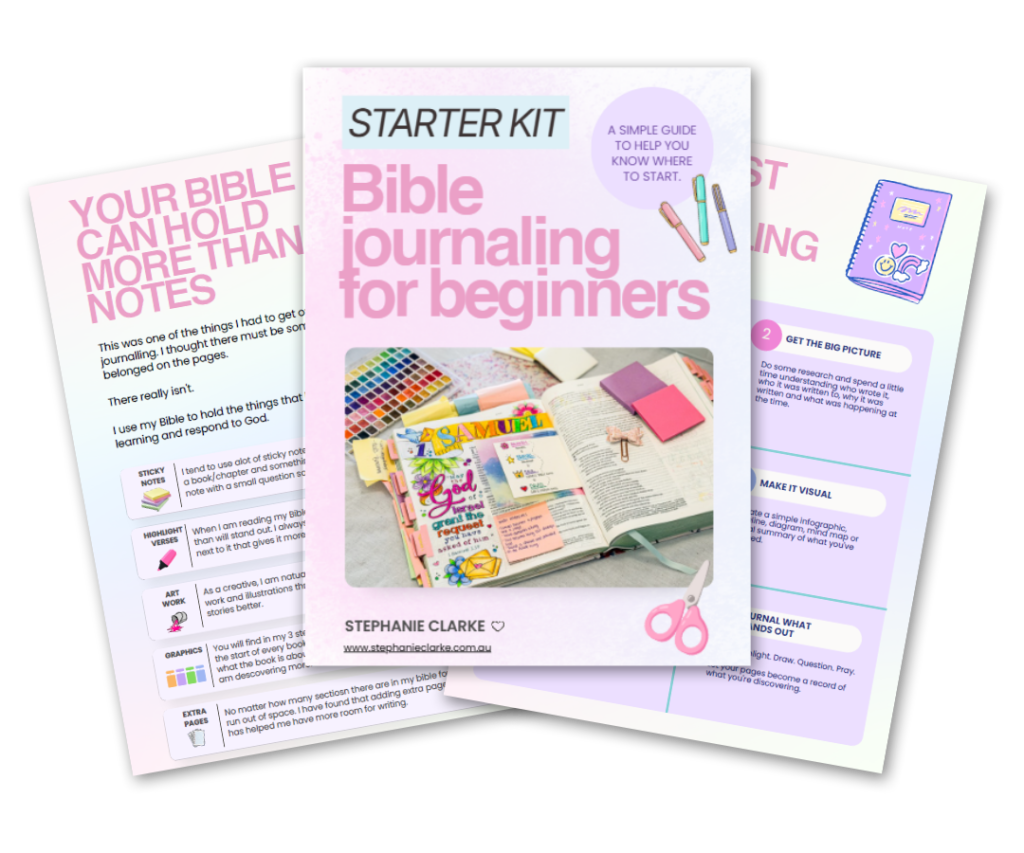
Bible Journaling for beginners FREE guide
I’ve created this FREE Bible Journaling Guide for Beginners to show you how to get started with Bible journaling in three simple steps.
Inside, I’ll walk you through what you need, how to approach your Bible and simple ways to make Bible journaling your own.
2. Try a Simple Chapter Study
If you want to go a little deeper, choose one chapter and make that your study rather than trying to tackle an entire book of the Bible at once. This is one of the easiest ways I’ve found to make Bible study feel manageable because there is a clear beginning and end.
I usually start by reading the whole chapter without stopping too much. Then I go back through it more slowly and start noticing the details. I might underline a repeated word, mark an important event, write the name of a person in the margin or make a note explaining something I didn’t understand the first time.
I also like giving the chapter a very simple summary in my own words. Not a theological essay, just enough that I could come back later and remember what the chapter was about. Sometimes that might only be a sentence or two.
You can also look at how the chapter fits into the wider book. What happened in the previous chapter? What happens next? If you know who wrote the book, who they were writing to and roughly what was happening at the time, that can be helpful too, but you don’t need to research every possible detail before you are allowed to begin.
3. Study a Person in the Bible
Character studies are probably one of my favourite ways to study Scripture because they make you follow a person’s story rather than looking at one isolated moment in their life. You start noticing relationships, decisions, patterns and details that are easy to miss when you only know the most famous parts of the story.
Ruth is a good example. If I were studying Ruth as a beginner, I wouldn’t start by trying to find twenty different commentaries about her. I would simply read the book of Ruth and start building a picture of what is happening.
Very quickly, there are things I would want to understand. Who is Naomi? Why are Ruth and Naomi both widows? Why does Ruth go with Naomi to Bethlehem? Who is Boaz, and why does his relationship to Naomi’s family matter? What does it mean that Ruth is a Moabite, and what is a kinsman-redeemer?
Those questions give me somewhere to go next.
I might write a small note beside Ruth 1 explaining the relationship between Ruth and Naomi. Later, I might note that Bethlehem means “house of bread,” or add a short explanation of what a kinsman-redeemer was. I would probably mark the places where Ruth’s loyalty is shown and begin noticing how redemption becomes an important theme throughout the book.
By the time I reach the end, I understand far more than I would have if I had simply highlighted a few verses I liked. I have started to understand Ruth within her story, her family, her culture and her place in the wider story of Scripture.
4. Dig Deeper Into One Verse, Without Removing It From Its Context
Sometimes there is one verse that I want to understand properly, especially if I have read it many times but never really stopped to think about what it is saying. When that happens, I will slow down and study that verse more closely.
The important part for me is not beginning with, “What does this verse mean to me?” I want to begin with what the verse actually means where it appears.
I read the verses around it and work out who is speaking and what they are talking about. If there is a word or phrase I don’t understand, I look it up. I might follow a cross-reference to another part of the Bible or compare how the same idea appears elsewhere in Scripture.
You don’t need to turn every verse into an enormous word study. Sometimes the thing that helps most is simply reading ten verses before it and ten verses after it. Context can do a lot of the work for you.
What I Actually Write in My Bible
When people first start Bible journaling, I think one of the biggest questions is simply, what am I actually meant to write? This was something I had to work out for myself too, because I didn’t want my Bible to become pages and pages of random notes that didn’t help me understand Scripture when I came back to them.
Most of what I write is quite practical. I might add a short definition beside a word I didn’t understand, explain a cultural practice, note a family relationship or write down why a location matters. I also write historical context, cross-references, key events, repeated themes and short explanations of passages that I have studied.
Sometimes it is incredibly simple. Beside a person’s name, I might write who their father or mother was. Beside a city, I might note where it was located. If something that happens in the New Testament connects back to the Old Testament, I might write the reference in the margin so I can find it again.
I also write down things I learn about God through the text, but I want those notes to come from what Scripture is actually showing me. That distinction has become important in the way I study. I’m trying to understand what is there before I start thinking about how it applies to my own life.
What You Can Take Away Today
If you want to start studying your Bible more deeply, I would keep your first study very small.
Choose one chapter. Read it slowly once, then read it again with a pen. Notice who is there and what is happening. Choose one thing you don’t understand and look it up, then write one thing in your Bible that will help you understand that passage when you read it again.
That is enough for today.
You don’t need an elaborate system before you begin. Bible study can start with something much simpler: opening your Bible, slowing down and learning to look a little closer at what is already on the page.
Bible Journaling for beginners FREE guide
I’ve created this FREE Bible Journaling Guide for Beginners to show you how to get started with Bible journaling in three simple steps.
Inside, I’ll walk you through what you need, how to approach your Bible and simple ways to make Bible journaling your own.